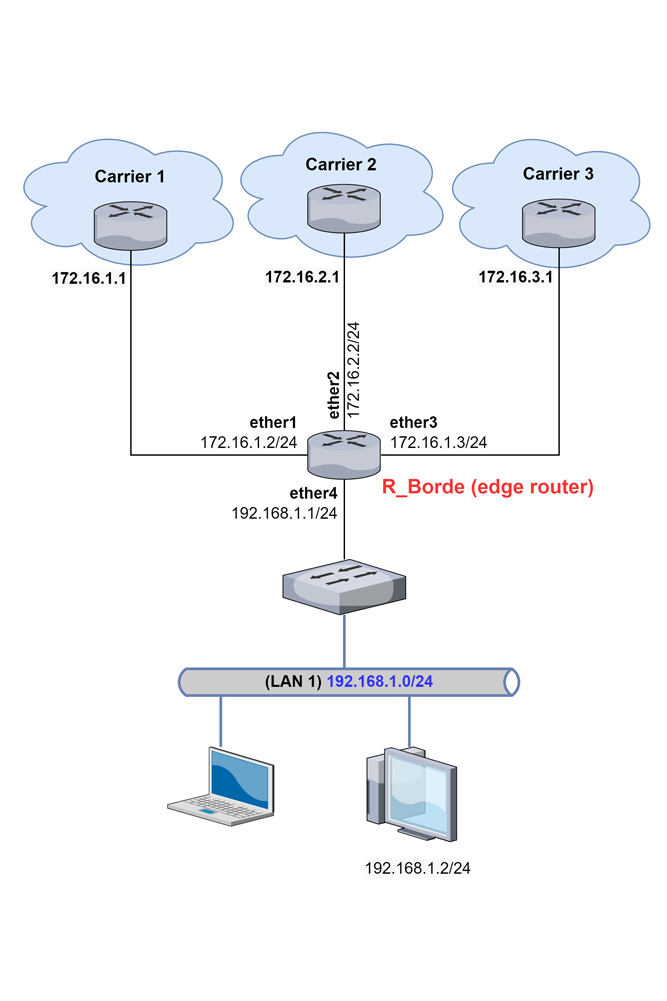
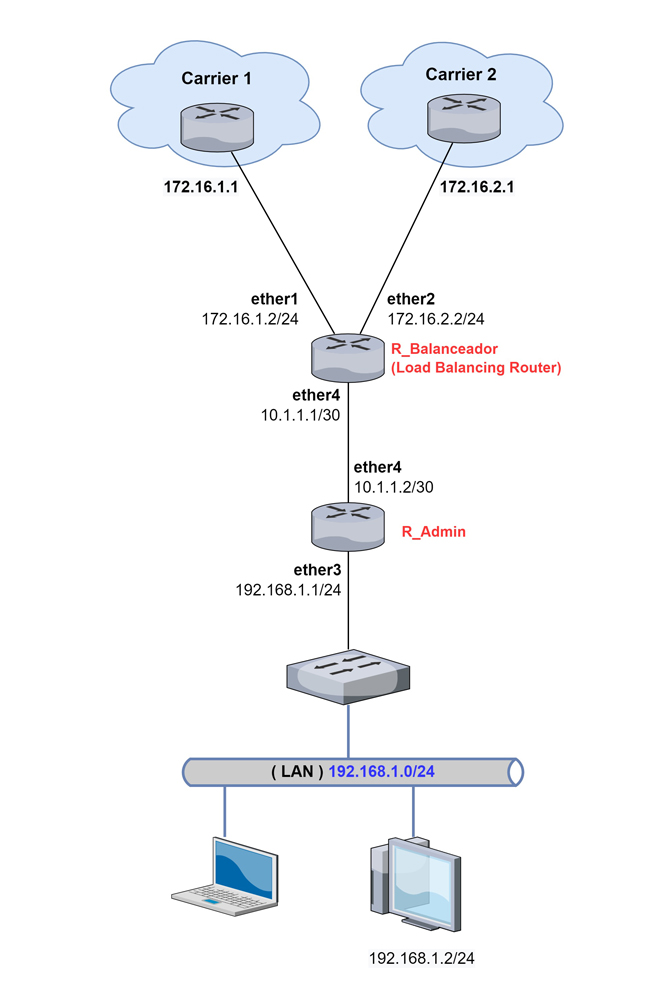
Logical diagrams of the networks analyzed in the laboratories
Detailed script of the different configurations
Permanent access to the training portal
Access to all future content updates or corrections
What you need to access this tutorial
Internet connection of at least 1 Mbps
Laptop or desktop computer preferably
Tablet or cell phone are an alternative
What the student will learn
By completing this tutorial, students will be able to:
Fundamentals of Failover
Implementation of Outbound Routes with Failover
Prioritization of Internet Service Providers
Advanced NAT Configuration
Route Marking for Specific Clients
Recursive Route Configuration
Troubleshooting and Diagnostics
Granular Network Traffic Management
Requirements
Understand basic networking concepts, such as network types (LAN, WAN), network topologies, and OSI/TCP-IP models.
Know the differences between public and private IP addresses, and how they are used in networks.
Have knowledge of subnets, netmasks and IP addressing.
Understand the basic concepts of routing and switching in networks.
Know how Dynamic Host Configuration Protocol (DHCP) and Domain Name System (DNS) work.
Understand the assignment of dynamic and static IPs.
General Objective
This tutorial is designed to equip network professionals with the necessary skills to manage and optimize internet access in environments with multiple service providers.
Through a series of practical and detailed tutorials, participants will learn to implement advanced solutions that ensure internet service continuity, improve network performance and reliability, and provide more effective and personalized traffic management.
ML-003-LAB-01
ML-003-LAB-02
ML-003-LAB-03
Chapter Objectives
1. Configure Outbound Internet Routes with Failover
You will learn how to ensure continuous internet connectivity by configuring failover on edge routers connected to multiple providers.
This chapter covers everything from the initial setup of interfaces and masquerading rules to the implementation of outbound routes with gateway availability checks and metric adjustments to prioritize providers.
2. Configure Outbound Internet Routes with Failover, Redirecting Traffic Through a Specific Provider
This section focuses on assigning specific routes for different clients in a failover environment, allowing users to ensure that certain clients always use a designated provider, despite the general failover mechanisms.
It includes advanced route marking configurations and routing tables for granular traffic management.
3. Configure Recursive Outbound Internet Routes with PCC Load Balancing
Students will learn to implement PCC load balancing with recursive routes to optimize the use of multiple Internet providers.
This chapter teaches how to ensure the full functionality of the route to known points on the internet, using concepts like Scope and Target-Scope, and how to test the configuration to ensure its effectiveness.
What Students Will Gain Upon Completion of This Course
By the end of this course, participants will have gained essential practical and theoretical skills for configuring and managing networks in environments with multiple Internet providers. They will be able to:
Implement failover solutions to ensure uninterrupted internet connectivity.
Effectively configure PCC load balancing and recursive routes to optimize network performance.
Perform advanced traffic management by assigning specific routes to designated clients and ensuring service continuity even in case of provider failures.
Diagnose and resolve issues related to route configuration and network performance.
This tutorial provides IT professionals with the tools and knowledge necessary to significantly improve the resilience, efficiency, and customization of the networks they manage, preparing them to face the challenges of an increasingly complex and demanding network environment.